
Moremi Ajasoro was a legendary Yoruba queen and folk heroine of present-day southwestern Nigeria, credited with the liberation of the kingdom of Ife from the neighbouring Ugbo. Her story has been retold across generations by writers, directors, and choreographers: as a bronze bust in Ile-Ife, as an annual festival, as required reading in Yoruba folklore, as opera, as traditional dance. Each retelling asks a version of the same question: what does Moremi still owe us, or we her?
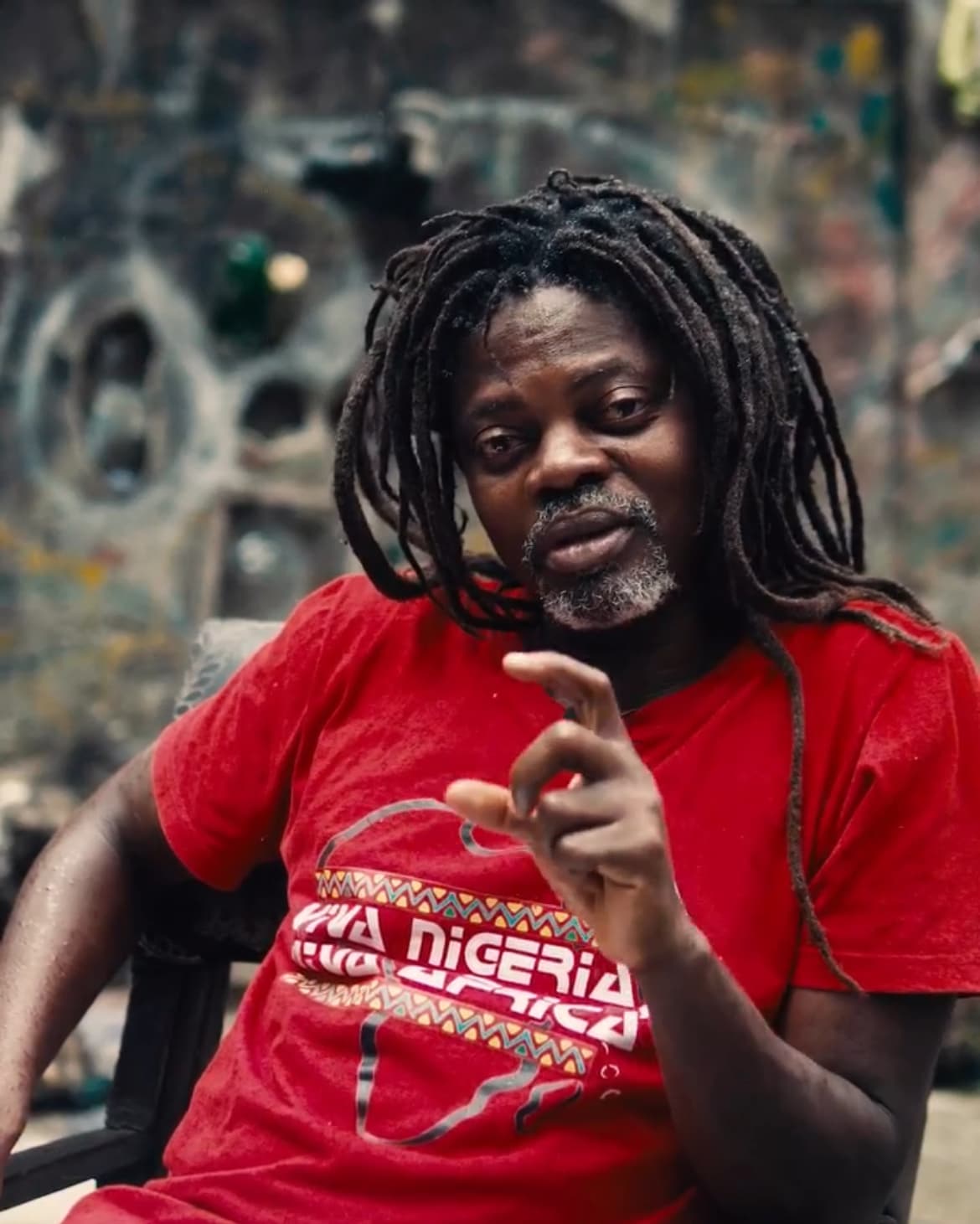
So what is it about Moremi that keeps pulling creatives (and the Yoruba people) back to her, centuries after centuries? Why does this centuries act of espionage still feel unfinished as a story? And what could possibly be left to say about a woman whose sacrifice is already carved into public memory? These are the questions Moving Ground put to Segun Adefila, director of Moremi RSV.
Before the questions, some context on why a stage drama belongs in a dance journal at all. Adefila is the co-founder and artistic director of Crown Troupe of Africa, a Lagos-based total-theatre company known for its integration of dance, drama, music, and visual arts rooted in African indigenous performance traditions, which he helped found in Bariga in 1996. His own grounding in performance did not begin in a script. It began in movement. Between the ages of seven and ten, in his father’s hometown of Omu Aran, Adefila was groomed to masquerade during the Odun Eegun festivals, where he learned to dance, sing, and inhabit the ancestral role the masquerade represents. That early apprenticeship in masquerade (arguably Yoruba performance’s oldest surviving dance-theatre form) is the through-line in everything Crown Troupe has staged since: text delivered through the body first, language second. It is why a “play” directed by Adefila reads, to a dance audience, less like theatre borrowing from dance and more like dance that has learned to speak.
Moremi RSV: Revised Standard Version, written by Ayodele Arigbabu, first premiered in 2003 at the University of Lagos, and has returned in various stagings since. Now directed by Segun Adefila, he explains what drew him to a text this irreverent toward its own source material, and why he chose to set centuries-old legend inside a Nigeria of laptops, faceless invaders, and helpless kings.
When I first read Ayodele Arigbabu’s Moremi RSV, I smiled, Adefila says. Arigbabu has taken a legend we all think we know and turned it completely on its head. In this RSV: Revised Standard Version, no fact is sacred, no myth is safe. The playwright exercises audacious creative liberty to reimagine Moremi for today. And that is exactly why I fell in love with it. As a director, I asked myself: what is Moremi saying to us, in the Nigeria of today?
Two things struck me immediately. First, the invasion. A land plagued by unknown forces. Enemies who strike and vanish, whose identity is masked but whose impact is felt by all. Does that not sound uncomfortably familiar? The insecurity, the faceless invaders of our farms and villages? Arigbabu’s Ife is Nigeria.
Second, the woman. In a time when fear paralysed kings and warriors, one woman found courage. Moremi chose to become a spy: to walk into the camp of the enemy, to risk her body, her dignity, her womanhood and motherhood, to learn their secret. That is the ultimate power and sacrifice of a woman, who is supposed to be the “weaker sex” (a term as foreign to us as the invasion itself).
That is the story we must tell. Which is why our interpretation is deliberately, defiantly modern. In our Ife, the king wears no paraphernalia of kingship. He is costumed in trendy clothing, yet he embodies a leadership rendered helpless. And our Ifa priest, Ba Fakunle, no longer consults Ifa with Opele and Ikin. When he needs to consult the Oracle, he opens a laptop instead. In today’s world, technology is the new divination. Data is the new Ifa.
We have kept the soul of the legend, but dressed it in the clothes of today, so that you can see yourself in it. This Moremi is not a museum piece. She lives in our offices, our markets, our streets. She is every Nigerian woman who dares to stand where others cower.
What Adefila is describing is not costume change for its own sake. It is a claim about where myth actually lives. Strip away the Opele and Ikin, and what’s left of the legend? If the answer is “still Moremi,” then the divination tools were never the point; the will to act was. That is the harder inheritance this production hands its audience: not admiration for a queen who once saved Ife, but a mirror held up to whoever is watching now. Who, in this Nigeria of faceless threats and paralysed leadership, is choosing to walk into the enemy’s camp instead of waiting for someone else to?
It is also worth asking what is risked in a revision this bold. A Moremi who consults a laptop instead of Ifa will read, to some, as provocation for its own sake: a modern gloss laid over a sacred story to make it palatable to a younger audience. But that reading misses what Adefila is actually arguing: that fidelity to a legend and fidelity to its costume are not the same thing. The play’s gamble is that Moremi’s courage was never contingent on sixteenth-century Ife; it can survive translation into laptops and trendy suits precisely because the courage, not the setting, was always the legend’s real content. Whether that gamble pays off is something no synopsis can settle. It is something you feel in a room, watching a helpless king in streetwear try to lead a people he cannot protect.
That is the case for going. Not because Moremi RSV promises reverence for a familiar story, but because it promises the opposite: a legend stripped of its comfortable distance and set down in front of you, in your Lagos, in your now. If the question this production is really asking is who among us still has Moremi’s nerve, the only honest way to answer it is to sit in the room and let it ask you directly.
Moremi RSV runs at The New Afrika Shrine, Ikeja, on 3 October 5pm. Director Segun Adefila and writer Ayodele Arigbabu welcome you to Moremi RSV: the legend, revised. The story, standard. The vision, reimagined.